While the most challenging aspect of 12306 is undoubtedly handling massive ticket queries and bookings, the frontend performance also leaves much to be desired. Here is a breakdown of optimization opportunities from a frontend engineering perspective.
- Minification: HTML, CSS, and JS files are currently served without minification. Using build tools like Webpack to strip whitespace and comments would reduce file sizes.
- Compression: Enabling GZIP or Brotli (BR) compression at the server level would further shrink assets, potentially reducing bandwidth overhead by up to two-thirds.
- Caching Strategy: The site currently relies heavily on conditional caching (negotiated cache), with
Cache-Controlmax-age set to 0. This leads to unnecessary round-trip requests. A mix of strong caching for immutable assets and negotiated caching for dynamic content would be more efficient. - HTTP/2: Upgrading to HTTP/2 would enable multiplexing, allowing multiple requests to be sent over a single TCP connection, thereby improving loading efficiency.
- CDN & Domain Sharding: Leveraging a Content Delivery Network (CDN) and implementing domain sharding for static assets would reduce latency and bypass browser concurrent connection limits.
- Bundling: Consolidation of multiple JS and CSS files into logical bundles using Webpack or Rollup would significantly decrease the total number of HTTP requests.
- Lazy Loading: Implementing lazy loading for off-screen images and non-critical data requests would improve Initial Page Load time.
- DNS Prefetching: Adding
<link rel="dns-prefetch" href="//kyfw.12306.cn">(and other critical domains) would reduce the latency of initial requests.
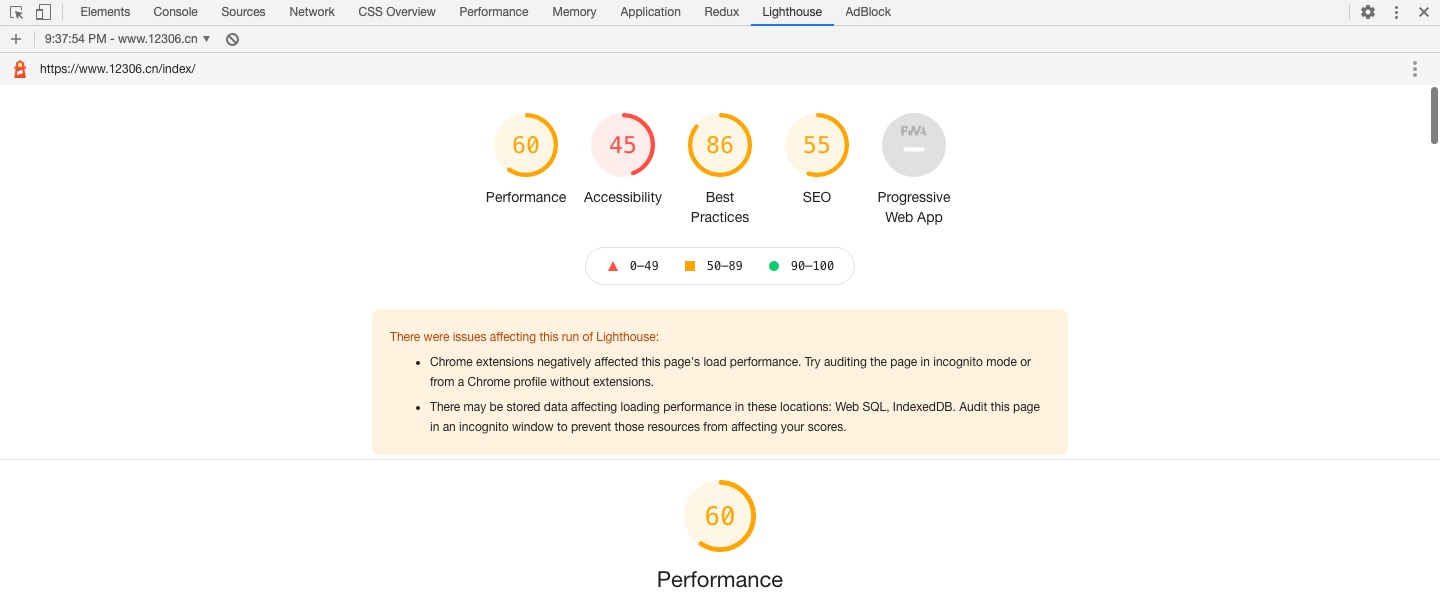
Performance Audit
Running a Lighthouse audit via Chrome DevTools confirms these observations. The site scored around 60—functional, but with significant room for improvement.
Final Thoughts
It’s easy to criticize popular applications, but constructive feedback is more valuable. These points highlight how China’s “National App” could provide a smoother experience through standard frontend performance practices.